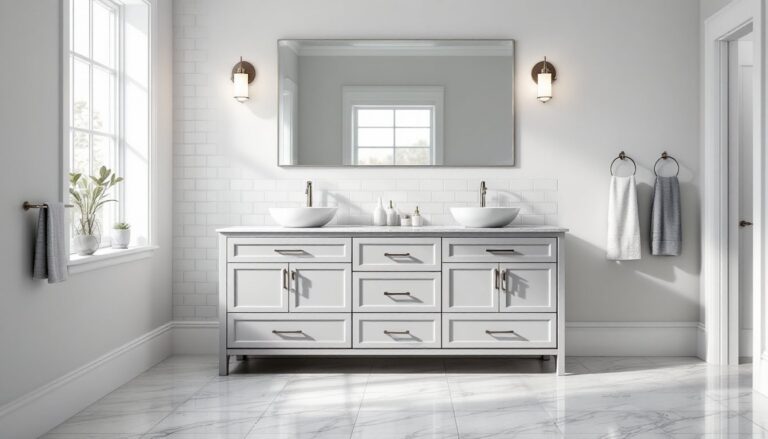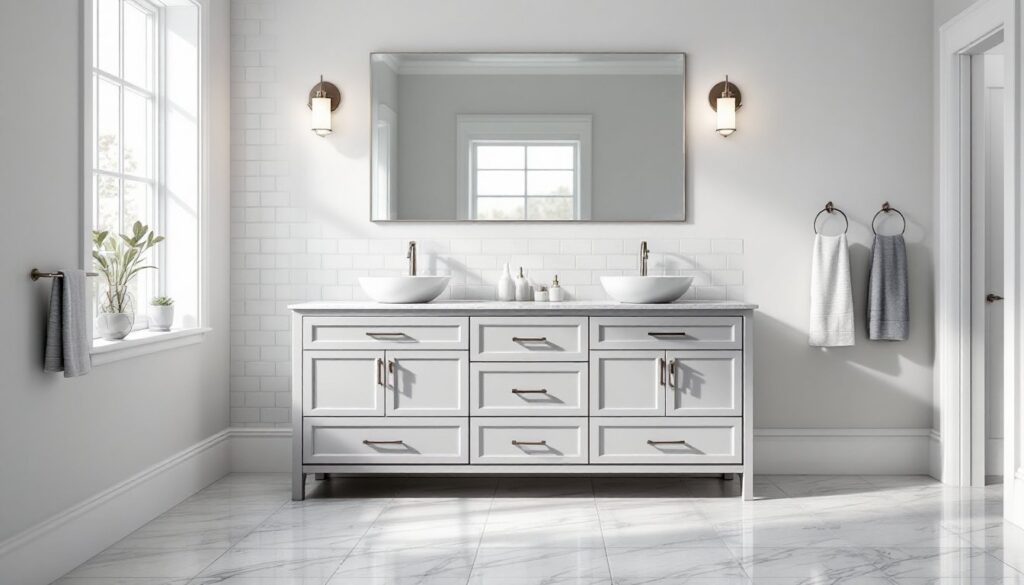

A 48-inch bathroom vanity strikes the sweet spot for most homeowners, wide enough to feel comfortable and functional, yet manageable for standard bathroom layouts. Whether you’re renovating a master bath or upgrading a guest powder room, this size offers balanced storage, counter workspace, and visual presence without overwhelming the room. Unlike smaller 30- or 36-inch vanities, a 48-inch model gives you genuine elbow room and storage depth. Unlike oversized 60-inch options, it doesn’t dominate tighter bathrooms or demand expensive plumbing modifications. In 2026, 48-inch vanities remain the most practical choice for homeowners tackling DIY installations or working with contractors, thanks to standard rough-in dimensions, widely available replacement parts, and a design-friendly middle ground.
Table of Contents
ToggleKey Takeaways
- A 48-inch bathroom vanity provides the ideal balance of functionality, storage, and space without overwhelming standard bathrooms or requiring expensive plumbing modifications.
- Look for solid wood or plywood cabinetry with soft-close drawer slides and moisture-resistant finishes to ensure your 48-inch vanity lasts 10+ years in humidity-prone bathroom environments.
- Mid-range vanities ($800–$2,000) offer genuine value with solid construction and quality hardware, making them the best choice for primary bathrooms over budget options with particle board frames.
- Proper installation requires measuring clearance, locating existing plumbing, leveling the unit, and securing it to wall studs—most 48-inch vanities align with standard 4-foot stud spacing for straightforward DIY installation.
- Choose counter material and sink configuration based on your household’s actual needs: engineered quartz resists stains, dual sinks suit couples, and matte finishes hide water spots better than high-gloss options.
Why A 48-Inch Vanity Is The Ideal Bathroom Size
A 48-inch vanity pairs functionality with practicality in ways smaller and larger options don’t quite match. Most standard bathroom layouts accommodate this width without tight squeezes or awkward door swings. The cabinet depth typically runs 21 to 22 inches (the standard), providing ample storage for toiletries, cleaning supplies, and personal care items without eating too much floor space.
The counter surface measures roughly 48 inches across, offering legitimate workspace for two people to use the sink simultaneously, a major quality-of-life upgrade in shared bathrooms. Plumbing rough-ins for 48-inch vanities align with common 4-foot stud spacing in residential construction, making installation straightforward for homeowners with basic carpentry skills.
Another advantage: 48-inch vanities sit at an accessible price point. You’re not paying the premium for custom-built 60-inch models, but you’re also not sacrificing storage like you would with a 36-inch unit. This size handles double-sink configurations, single large sinks with wraparound countertops, or single-sink layouts with expansive counter real estate, giving you design flexibility.
Key Features to Look For When Shopping
When evaluating 48-inch vanities, focus on construction quality, drawer mechanics, and how the piece fits your actual bathroom workflow.
Storage And Counter Space Considerations
Storage configuration matters more than raw measurements. A vanity with three drawers and a cabinet below beats a model with one oversized drawer and wasted shelf space. Soft-close drawer slides cost more upfront but last significantly longer and eliminate daily slamming, a worthwhile investment if you plan to keep the vanity 10+ years.
Counter depth affects usability: 22-inch depth is standard, but some luxury models go 24 inches, giving extra setback from the wall for toiletries and accessories. Consider whether your sink layout works for your household. A single large sink (20 to 24 inches wide) suits households that don’t share simultaneously: dual sinks (each 18 to 20 inches) work better for couples or families.
Counter material durability varies dramatically. Laminate is budget-friendly but chips easily: engineered quartz resists stains and scratches: real granite or marble looks stunning but requires sealing and careful maintenance. Think honestly about your household traffic and maintenance tolerance before choosing.
Materials And Durability Standards
Cabinet construction separates budget vanities from solid performers. Plywood or solid wood frames outperform particle board in humidity-prone bathrooms. Bathroom moisture is relentless, poor cabinetry swells and delaminates within 3 to 5 years. Look for vanities with moisture-resistant finishes on the interior and exterior.
Hardware quality, hinges, pulls, and knobs, signals overall craftsmanship. Cheap hardware strips out and fails quickly with daily use. Test drawer slides in the showroom: they should glide smoothly without binding.
Faucet compatibility matters. Most 48-inch vanities accept 8-inch or 4-inch centerset faucets, but confirm specifications before buying. If you’re reusing an existing faucet, verify the sink hole spacing matches (typically 4, 6, or 8 inches center-to-center).
Installation And Space Planning Tips
Before ordering, measure your bathroom and plan the vanity placement like a pro. Measure from the finished wall surface to the opposite wall: subtract 2 to 3 inches for clearance if doors swing nearby. Most building codes require at least 21 inches of clear space in front of the vanity sink for standing and maneuvering.
If plumbing lines exist, locate them before installation. Most 48-inch vanities have a center-mounted drain, but some accommodate offset drains. Rough-in height for supply lines is typically 20 to 24 inches from the floor: confirm your vanity accommodates this before cutting drywall.
Remove the old vanity carefully: turn off water supply, disconnect supply lines using an adjustable wrench, and unscrew the vanity from wall studs (usually two to four fasteners). Old caulk should be scraped away completely: any residue prevents a watertight seal on the new unit.
Place the new vanity, level it front-to-back and side-to-side using a 4-foot level, then shim gaps with tapered shims. Screw the vanity to studs, never rely on caulk alone to hold weight. Install the sink and faucet per manufacturer instructions, then caulk the seams between vanity, wall, and flooring with 100% silicone caulk for water protection.
If plumbing modifications are needed, most jurisdictions require a licensed plumber and permit. Don’t guess, call your local building department first. Rough electrical work for a heated mirror or lighting often requires permit and inspection, especially if you’re adding circuits.
Popular 48-Inch Vanity Styles For Every Design Aesthetic
Style and material options for 48-inch vanities run the full spectrum. Modern and minimalist designs feature handle-free drawers, clean lines, and soft-close mechanisms, often paired with concrete, sleek tile, or matte black fixtures. These suit contemporary homes and open bathrooms where visual simplicity reads as luxury.
Traditional and transitional vanities use raised panels, turned legs, and warm finishes in oak, cherry, or maple. They pair well with vintage-style faucets and hexagon tile flooring, creating classic bath spaces that feel timeless.
Rustic and farmhouse styles emphasize weathered wood, open shelving below, and industrial hardware, popular for cabins, cottage-style homes, and barndominium renovations. Reclaimed wood or distressed finishes complement shiplap walls and vintage mirrors.
Resources like Houzz’s bathroom collection showcase thousands of 48-inch vanity installations across styles, helping you visualize how specific vanities work in real bathrooms. Remodelista’s design sourcebooks curate high-end vanity options with styling tips if you’re seeking designer-level inspiration.
Color matters: white and soft gray remain top choices for resale value and versatility. Navy, black, and deep greens work for bold, personal spaces. Matte finishes hide water spots better than high-gloss, though they’re slightly harder to clean.
Budget-Friendly Vs. Premium Options
Budget vanities ($400–$800) often use particle board frames and laminate counters, adequate for powder rooms or guest baths with light use. Drawers may stick slightly, finishes might show wear in 5 years, but they’re functional for the price. Skip the rock-bottom options (<$400): quality drops sharply and failure rates spike.
Mid-range vanities ($800–$2,000) blend solid wood cabinetry with engineered quartz or cultured marble countertops. Soft-close hardware and moisture-resistant finishes extend longevity to 10+ years. This tier offers genuine value and suits most primary bathrooms.
Premium vanities ($2,000–$5,000+) feature plywood or solid hardwood, natural stone counters, designer finishes, and hardware sourced from high-end manufacturers. They’re investments in durability and aesthetic impact. HGTV’s renovation guides often feature premium vanity selections in luxury bathroom projects, showing how high-end choices influence overall design cohesion.
Don’t confuse price with quality: a $1,200 vanity from a reputable manufacturer often outlasts a $1,000 model from a discount retailer. Research reviews, check warranty terms, and verify return policies. Shipping is expensive, so damage claims and returns can be frustrating, buy from retailers with clear replacement policies.