
Hard water is one of those problems that quietly destroys your plumbing, appliances, and your wallet over time. If you’ve noticed stubborn soap scum, dull laundry, or scale buildup on your fixtures, you’re dealing with high mineral content, usually calcium and magnesium, in your water supply. A whole house water softener and filtration system addresses these issues at the point of entry, protecting every tap, shower, and water-using appliance in your home. Unlike pitcher filters or point-of-use systems, a properly sized whole-house setup handles your home’s total water demand without shortcuts. This guide walks you through what to look for, how to install one, and what it actually costs to get clean, soft water flowing throughout your home.
Table of Contents
ToggleKey Takeaways
- A whole house water softener and filtration system protects your plumbing, appliances, and finances by removing hard water minerals at the point of entry before they damage equipment and increase maintenance costs.
- Properly size your system by calculating daily water usage (80–100 gallons per person) multiplied by water hardness level; a family of four in moderately hard water typically needs 32,000–48,000 grain capacity.
- Demand-initiated regeneration is the most efficient option for whole house water softener systems, using only 3–5 gallons of water per cycle compared to 20+ gallons in older timer-based models.
- Request a free water analysis from your municipal supplier before purchasing to identify specific contaminants and avoid overspending on unnecessary premium features.
- Mid-range systems ($1,000–$2,500) with dual-tank multi-stage filtration deliver better performance than budget options, as entry-level systems without pre-filters cause sediment to clog the resin bed and require costly replacements.
- Maintenance is simple and affordable—check salt levels monthly and expect annual costs of $60–$120, with resin beds lasting 10–15 years when properly maintained.
Understanding Water Softening and Whole House Filtration
Hard Water Problems and System Benefits
Hard water contains dissolved minerals that don’t harm your health but wreak havoc on pipes, heaters, and appliances. Soap and detergent don’t lather properly, laundry fades faster, and you’ll spend more on cleaning products. Over time, mineral deposits (called limescale) build up inside water heaters, reducing efficiency and shortening their lifespan. A typical tank-style water softener uses ion exchange, essentially swapping calcium and magnesium ions for sodium or potassium ions, leaving you with water that feels slippery (that’s soft water) and protects your equipment.
Whole-house filtration systems remove sediment, chlorine, chloramines, and sometimes dissolved solids before softening occurs. Many homeowners pair a sediment filter (for visible particles), a carbon filter (for taste and odor), and a water softener resin tank into one comprehensive system. This multi-stage approach tackles hard water, chemical contaminants, and poor taste in one go. The result: cleaner skin and hair, whiter clothes, spotless dishes, and appliances that last longer. Regional water quality varies dramatically, so know your water analysis before buying, many municipal suppliers provide it free, or you can test it yourself for $20–$50.
Key Features to Look for in a Quality System
Water Capacity, Regeneration Cycles, and Filtration Technology
Size matters. A grain capacity measures how many grains of hardness a softener can remove before regenerating (typically 24,000 to 80,000 grains, with higher capacity = longer between cycles). Calculate your home’s daily hardness load: multiply your daily water usage (about 80–100 gallons per person) by your water’s hardness level (in grains per gallon). A family of four in a moderately hard water area (7–10 gpg) needs a system sized around 32,000–48,000 grains to regenerate every 5–7 days. Too small, and you’ll regenerate constantly: too large, and salt sits unused.
Regeneration cycles vary by system type. Demand-initiated regeneration waits until the resin is actually exhausted (most efficient and cost-effective). Timer-based systems regenerate on a schedule regardless of use (wastes salt and water). Meter-based systems track gallons used and regenerate after a set volume (a good middle ground). Look for systems with efficient regeneration, newer designs use 3–5 gallons of water per regeneration cycle versus older models that need 20+ gallons.
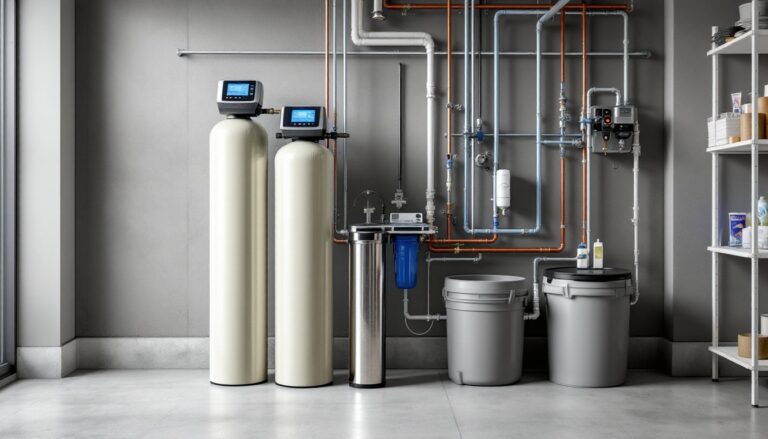
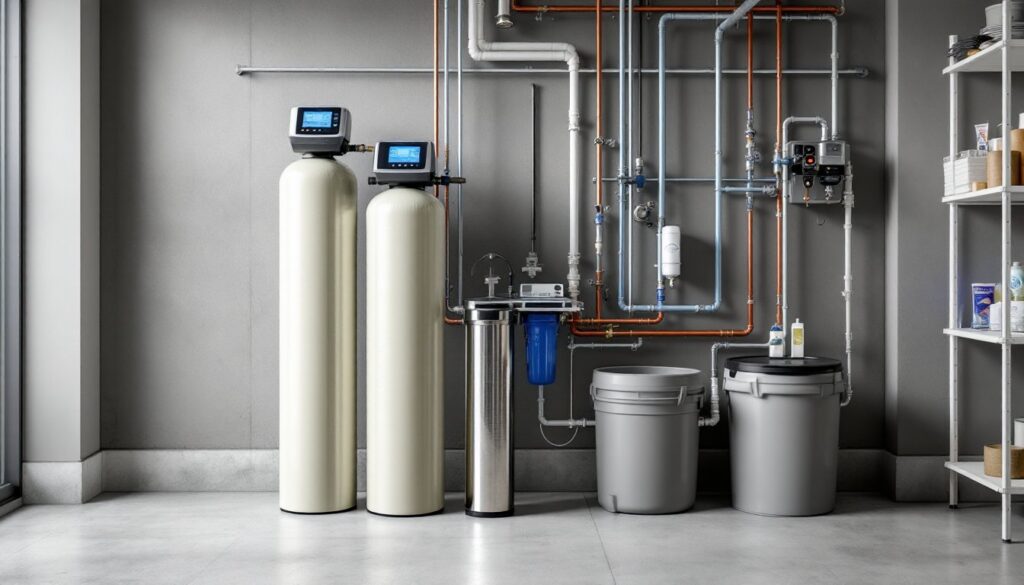
Filtration technology layers matter. Single-tank systems soften water but don’t filter well. Dual-tank setups run softening and filtration simultaneously, reducing wait times. Multi-stage systems (sediment pre-filter → carbon filter → softening resin → sometimes a polishing stage) deliver the cleanest water. Products from established brands recommended by Good Housekeeping often use Vortech or Fleck valve technology, which improves backwash efficiency and reduces salt consumption. Don’t just chase brand names, match the system to your water analysis and household size.
Installation and Maintenance Considerations for Homeowners
Installation difficulty depends on your home’s plumbing setup. Homes with a basement or utility room near the main water line are easiest. The softener sits on the main line before it splits to hot and cold branches, and you’ll need adequate floor space (a typical tank measures 48″ tall and 20″ wide). If your water heater’s bypass isn’t accessible, or if your main line is buried under concrete, you might need a plumber, especially in homes with complex plumbing or where a permit is required (check with your local building department first).
Basic installation: Shut off the water at the main valve, cut a section of the main line with a PEX cutout tool or hacksaw, install the softener using PEX fittings or copper adapters, then restore water and check for leaks. The salt tank sits beside the resin tank and draws salt from a hopper for regeneration cycles. You’ll need to add rock salt or solar salt (food-grade if you’re concerned) every 2–4 months depending on water usage and hardness.
Maintenance is straightforward. Check the salt level monthly (it should be half-full) and refill as needed, salt costs $5–$8 per 40-lb. bag. Annually, inspect brine line connections for leaks and test water softness with a test strip ($1–$3). If you notice reduced softening, the resin bed may be clogged with sediment, requiring a cleaning cycle or tank replacement (every 10–15 years). Homes with heavy sediment should use a pre-filter to extend resin life. Most dual-tank systems alert you to maintenance needs via a display screen.
Budget-Friendly vs. Premium Systems
Entry-level systems (24,000–32,000 grain capacity, single-tank) run $400–$800 and work fine for small households or lightly hard water. But, homeowners often oversimplify: a $500 system without a pre-filter forces sediment into the resin, shortening its life. You’ll spend more replacing resin beds than you saved upfront.
Mid-range systems ($1,000–$2,500) offer dual-tank setups with built-in multi-stage filtration, demand-initiated regeneration, and larger grain capacities (48,000–64,000). These handle most household needs and include a 5-year warranty. Installation by a licensed plumber adds $800–$1,500 depending on your plumbing complexity. According to cost guides from Angi, the average whole-house system installation runs $1,500–$3,000 all-in.
Premium systems ($2,500–$5,000+) feature smart controls, app monitoring, iron and sulfur removal, and sometimes reverse-osmosis polishing stages. They’re overkill for most households unless your water analysis reveals specific contaminants. Maintenance costs are similar across tiers, about $60–$120 yearly for salt, but higher-end systems regenerate more efficiently, using less salt overall. Don’t equate price with performance: a properly sized mid-range system will outperform an oversized budget unit. Request a water analysis from your municipal supplier (free or $20) before shopping, it’s the single best investment in choosing the right system. Expert recommendations from Bob Vila consistently emphasize matching system size to actual household demand rather than oversizing for prestige.
Conclusion
A whole-house water softener and filtration system is one of the smarter long-term investments a homeowner can make. Hard water and poor water quality quietly cost you money through appliance wear, cleaning product waste, and shortened plumbing life. Size your system to your household’s actual usage and your water’s mineral content, don’t guess or overbuy. Install it properly (or hire a professional if your plumbing is complex), maintain it simply, and you’ll enjoy clean, soft water for 10–15 years. Your skin, laundry, and water heater will thank you.