
A 400-square-foot tiny house floor plan isn’t about cramped living, it’s about intentional design. Whether you’re building a primary residence, a backyard ADU, or a vacation retreat, a well-planned 400 sq ft layout can feel surprisingly spacious when every inch serves a purpose. The trick isn’t adding more square footage: it’s arranging what you have so the space flows naturally, storage stays hidden, and living areas feel open rather than boxed in. This guide walks through proven floor plan strategies, layout styles, and design choices that successful tiny house builders use to maximize comfort without sacrificing functionality.
Table of Contents
ToggleKey Takeaways
- 400 sq ft tiny house floor plans succeed when every inch is intentionally designed, using open-concept layouts, lofts, and multi-use spaces to maximize comfort and functionality.
- Open floor plans merged with zone-defining elements like islands or flooring transitions create the illusion of spaciousness without requiring hallways or walls that waste square footage.
- Strategic storage solutions—built-in closets, under-stair drawers, wall-mounted shelves, and lift-top benches—separate livable tiny homes from cluttered ones by eliminating clutter.
- Loft-style bedrooms positioned above living areas recover valuable floor space below while maintaining privacy and acoustic separation, requiring a minimum 8-foot ceiling height.
- Efficient kitchen designs for 400 sq ft homes range from single-wall to L-shaped layouts, keeping the kitchen footprint between 80 and 120 square feet to avoid dominating the entire floor plan.
- Connecting interior space to outdoor decks or patios (8×12 to 10×16 feet) psychologically expands the tiny home and extends living area without adding interior square footage.
Open Concept Layouts For Maximum Efficiency
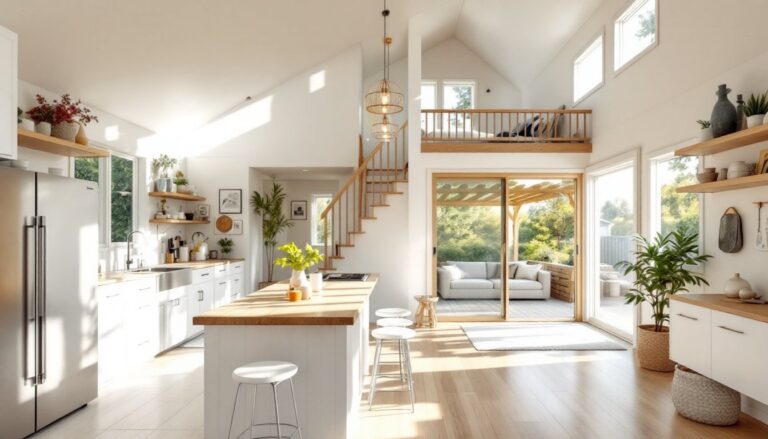
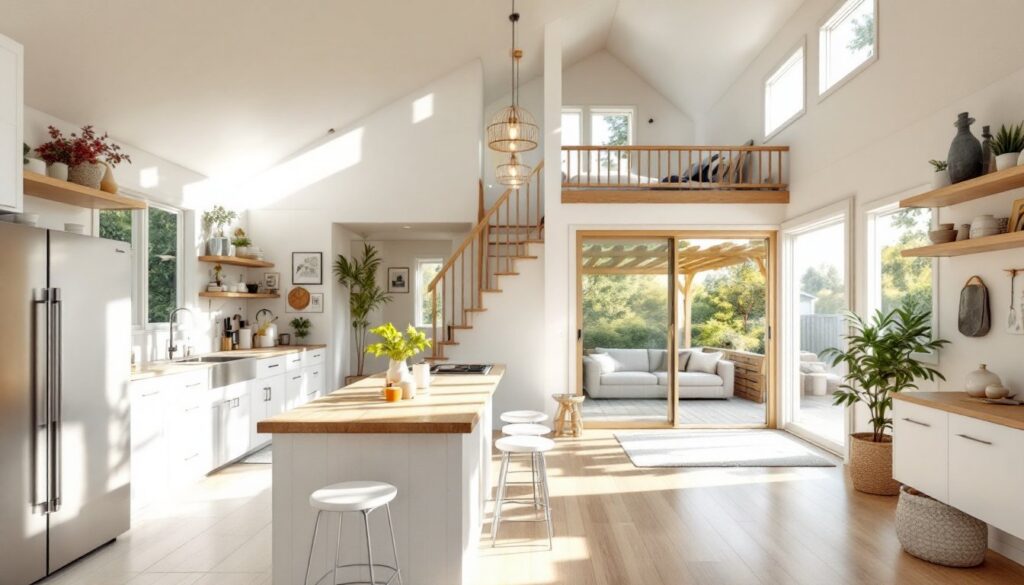
The most livable 400 sq ft homes merge the kitchen, dining, and living areas into one continuous space. This eliminates hallways and walls that eat square footage without adding utility. An open floor plan also tricks the eye, sightlines stretch across the entire footprint, making the space feel larger than it actually is.
When you’re working with limited square footage, the boundary between rooms becomes functional rather than visual. A kitchen island or a half-wall can define zones without blocking light or airflow. Flooring transitions (say, tile in the kitchen, wood in the living area) also signal a room change without requiring a door. Wall-mounted shelving and vertical storage keep the floor clear, which maintains that sense of openness.
Single-Wall And Two-Wall Kitchen Designs
A single-wall kitchen runs along one side of the space, leaving the opposite wall open for living or dining. This layout works best when the kitchen is positioned at one end of the home, with living areas flowing away from it. Appliances (refrigerator, stove, sink) are arranged in a line, and you move in a straight path while cooking, efficient but compact.
A two-wall or galley kitchen places cabinetry and appliances on opposing walls, with a narrow walkway between. Galley kitchens give you more counter and storage space than a single wall, but they require careful traffic flow planning. Make sure the galley doesn’t block the main circulation path through your living area. Standard galley width is 42 to 48 inches between walls: anything narrower starts to feel claustrophobic.
Consider an L-shaped kitchen if you have a corner to work with. This hybrid gives you two walls of counter space without the narrow passage of a true galley. For 400 sq ft homes, keep your kitchen footprint between 80 and 120 square feet, enough to be functional without dominating the entire floor plan.
Loft-Style Bedrooms And Multi-Use Spaces
A bedroom in a 400 sq ft house rarely exceeds 120 square feet. Instead of fighting this reality, embrace vertical space. A mezzanine or loft bedroom positioned above the living area recovers valuable floor space below. The sleeping area feels separate (good for privacy and acoustics), while the footprint underneath stays open for a sofa, desk, or additional living room.
Loft bedrooms require ceiling height, typically 8 feet minimum on the main floor, with 6 to 7 feet at the loft edge. Building codes vary by jurisdiction, so check with your local building department before designing. Stairs to a loft take up floor space too: a steep stair, a ladder, or a ship’s ladder ($200–$600) saves more room than a full staircase.
If a loft isn’t feasible, a traditional bedroom wall-off works fine, but think about multifunctional layouts. A bedroom that doubles as an office or craft space needs built-in desks, shelving, or fold-down surfaces. Murphy beds (wall-mounted fold-down beds, $800–$3,000) dramatically free up daytime floor space, though they’re better suited to secondary sleeping areas than primary bedrooms. A guest room or home office area can shrink to 80 square feet if it primarily serves as sleeping or desk space.
Many 400 sq ft plans include a flexible space: a room without a fixed purpose that adapts to resident needs. This could be a second bedroom, a studio, a home gym, or a home office depending on the owner’s priorities. Designing for flexibility, neutral walls, good lighting, accessible outlets, makes this space genuinely useful long-term.
Storage Solutions Built Into Floor Plans
Storage built into the walls is non-negotiable in a 400 sq ft home. Every unused wall cavity is wasted opportunity. Here’s where intentional design separates livable tiny homes from cluttered ones.
Under-stair storage captures space below a loft staircase: drawers, cubbies, or hinged cabinets that slide in between stringers. A 3-foot-wide stair might give you 15–25 cubic feet of hidden storage. Closets should wrap corners where walls meet, eliminating dead space. A corner closet is deep enough (24 inches) to hang clothes perpendicular to the wall, storing more than a narrow linear closet.
Kitchen pantries in tiny homes often shrink to a single-wall unit, 18 to 24 inches wide, floor to ceiling. This trades some counter space for dry goods storage. Equally useful: floating shelves above the kitchen sink or alongside cabinets. Shelving above doorways captures the 12 to 18 inches of space above doors, perfect for bins, baskets, or lightweight items.
Built-in benches at dining or living spaces hide storage beneath seat cushions. A 48-inch bench with a lift-top stores 8–12 cubic feet of bedding, off-season clothes, or household supplies. Wall-mounted fold-down desks save floor space while providing a work surface. When folded up, it disappears into the wall.
Closet organization matters as much as closet size. Shallow shelving (6 to 8 inches deep) along walls for books, plants, or décor keeps items visible and accessible. Double-hanging rods in closets let you store twice as many clothes in the same footprint. Budget $1,200–$2,500 for quality built-in storage solutions in a 400 sq ft home: cheap particle-board units fail quickly under heavy use.
Bathroom Layout Options For Compact Homes
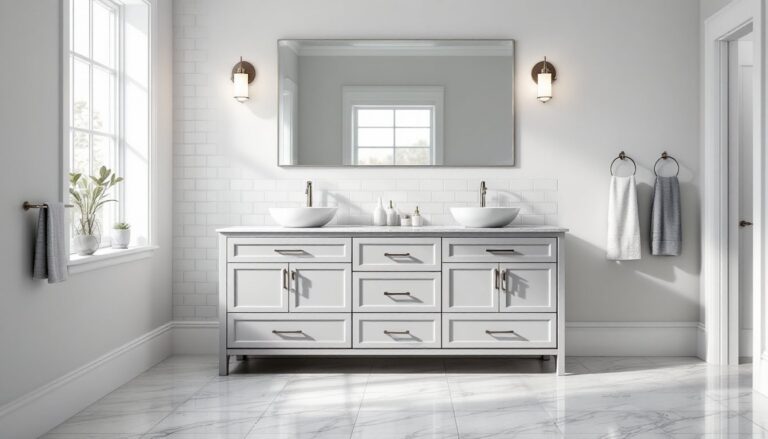
A full bathroom in 400 sq ft rarely exceeds 35 to 40 square feet. A half-bath (toilet and sink only) fits in 15 to 20 square feet. Many tiny homes choose a single full bath positioned centrally, rather than spreading plumbing across multiple rooms, plumbing concentrates expenses and structural requirements.
A wet room, an open shower with a floor drain instead of a separate tub or shower stall, dramatically shrinks bathroom footprint. Wet rooms work in bathrooms as small as 25 square feet because the entire room becomes the shower. Waterproofing is critical: all walls and the floor must slope toward the drain, typically requiring a contractor ($2,500–$4,500 for a complete wet room build). Check building codes, some jurisdictions restrict wet rooms or require specific plumbing approvals.
For traditional layouts, a combined tub-shower (60 inches × 30 inches minimum) is more space-efficient than separate fixtures. A pedestal or wall-mounted sink saves floor space versus a vanity cabinet, though you lose under-sink storage. Wall-mounted toilets save a few inches and simplify cleaning, but they cost more upfront ($400–$800 for the tank unit, fixture, and rough-in).
Ventilation is critical in a 400 sq ft home. A bathroom exhaust fan rated for bathroom size (per CFM, cubic feet per minute, recommendations) prevents moisture buildup in tight quarters. For a 35 sq ft bathroom, a 100 CFM fan is standard: a wet room might need 150 CFM. Ducting should exit to the outside, not into an attic, to prevent mold. This is non-negotiable, regardless of climate.
Position the bathroom near the home’s center or against an exterior wall for plumbing efficiency. Clustering bathroom and kitchen plumbing onto one wall reduces pipe runs, saving materials and money.
Outdoor Living Integration And Deck Placement
A 400 sq ft house feels larger when it connects seamlessly to outdoor space. A deck, patio, or porch extends your effective living area without adding to the interior footprint. In a tiny home, this psychological expansion matters as much as actual square footage.
A typical deck for 400 sq ft home runs 8 × 12 feet to 10 × 16 feet (96–160 sq ft). This gives you room for a small dining table, a few chairs, and circulation without feeling cramped. For a second-story deck (above a garage or on a hillside build), railings and load capacity matter: decks are engineered structures. Check IRC (International Residential Code) standards and local building permits, many jurisdictions require permits for decks.
Sliding glass doors or bi-fold doors create visual continuity between interior and exterior, making the main living area feel boundless. A 36-inch-wide slider is standard: wider doors ($1,200–$2,000) cost more but open the interior dramatically. Ensure the threshold is low (2 to 3 inches maximum) so the transition feels seamless.
Shade structures, pergolas, overhangs, or retractable awnings, extend your outdoor season and protect interior furniture from UV fading. A simple 8 × 8 pergola attached to the house ($800–$1,500 DIY) gives you 64 square feet of dappled shade. In hot climates, this transforms an unusable deck into an extension of living space.
In resources like Apartment Therapy, you’ll find small-space outdoor design ideas that apply directly to tiny home decks, container gardens, vertical planters, and compact furniture make outdoor areas function without clutter. Orient outdoor seating to capture views, prevailing breezes, or morning sun. In a tight footprint, thoughtful positioning doubles perceived comfort.
Popular Tiny House Styles And Their Layouts
Not all 400 sq ft layouts look the same. Different styles prioritize different features, and choosing a layout style early shapes every decision that follows.
Modern efficient layouts maximize open space and minimize hallway waste. These homes feature wide-open living areas, minimal visual obstruction, and clean sightlines. Kitchen islands and peninsulas create zones without walls. Modern tiny homes often include a small loft for sleeping, freeing the main floor entirely for living, working, and dining. This style suits remote workers and couples without children.
Farmhouse or rustic styles embrace cozier layouts with defined rooms and clear separation between living and sleeping areas. These homes might sacrifice some open-concept efficiency for individual character rooms, a small bedroom, a distinct kitchen, a separate dining nook. Rustic styles favor wood beams, board-and-batten siding, and traditional floor plans, even at the cost of a few extra square feet.
Scandinavian-inspired tiny homes balance minimalism with comfort. Light wood, whitewashed walls, and layered textiles create warmth without clutter. These homes invest in quality storage (seamlessly integrated cabinetry), good natural light, and clever space-saving furniture. The aesthetic prioritizes calm and function over decoration.
Real-world examples abound: tiny homes in a Florida community start around $100K and showcase how different builders approach 400 sq ft footprints, from single-story ranch styles to elevated homes on stilts. Studying built examples, visiting model homes, touring home shows, or browsing design resources like Houzz, reveals how different layout decisions feel in real space.
Your choice of style should reflect how you actually live, not how you imagine you’ll live. If you cook frequently, don’t sacrifice kitchen space for a trendy open concept. If you need a home office, ensure adequate desk space and acoustic separation from living areas. The best tiny house floor plan is the one that supports your daily routines.