
Planning a bathroom remodel? The timeline question tops every homeowner’s list, and for good reason. A bathroom remodel schedule depends heavily on project scope, existing conditions, and whether surprises lurk behind the walls. A small bathroom remodel might wrap in two to four weeks, while larger renovations stretch to three months or more. Understanding what to expect at each phase helps you plan time off work, arrange contractor schedules, and set realistic expectations. This breakdown covers actual timelines for projects of all sizes, the key phases that move the needle, and the hidden delays that derail even well-planned jobs.
Table of Contents
ToggleKey Takeaways
- A bathroom remodel timeline ranges from 2–4 weeks for small cosmetic updates to 8–12+ weeks for major renovations with structural changes, depending on scope and existing conditions.
- Permit delays and inspection scheduling are hidden timeline factors that can add 2–4 weeks, so file permits early and book inspections weeks in advance to stay on schedule.
- Hidden water damage, mold, and outdated systems discovered during rough-in work can extend a bathroom remodel timeline by 1–3 weeks—hire a pre-project inspector to catch problems early.
- Ordering long-lead items like custom vanities and specialty tile before construction begins prevents fixture delays that can otherwise disrupt your entire bathroom remodel schedule.
- Scope creep and mid-project changes compound time and costs in ways contractors can’t always predict, so make all decisions upfront and stick to your original plan.
- Drying time for drywall, tile adhesive, grout, and paint is non-negotiable, adding 5–10 days to your bathroom remodel timeline regardless of crew size.
Typical Bathroom Remodel Duration By Project Scope
Small Bathroom Remodels (2-4 Weeks)
A small bathroom remodel, think cosmetic updates to a 5×8 bathroom, typically runs 2–4 weeks with a single contractor or small crew. This scope includes new fixtures, tile work, paint, and hardware swaps without structural changes. How long does it take to remodel a small bathroom? If the existing layout, plumbing, and electrical are serviceable, you’re looking at the shorter end. A crew of two to three can demo, rebuild, and finish in 10–15 working days if no complications arise.
Small bathroom projects work fast because there’s less surface area and fewer systems to touch. But, 2–4 weeks assumes permits are pulled early and inspections slot in smoothly. If you’re budget-conscious, cosmetic-only work (paint, fixtures, hardware) might finish in as little as one week with minimal crew time.
Mid-Range Bathroom Remodels (4-8 Weeks)
Mid-range remodels typically take 4–8 weeks. This includes new vanity, tile shower or tub surround, flooring, lighting, and minor plumbing/electrical relocations. A bathroom remodel schedule at this level assumes standard conditions, no asbestos, no mold, no structural surprises. Most homeowners fall into this bucket: you’re updating fixtures and finishes but keeping the footprint intact.
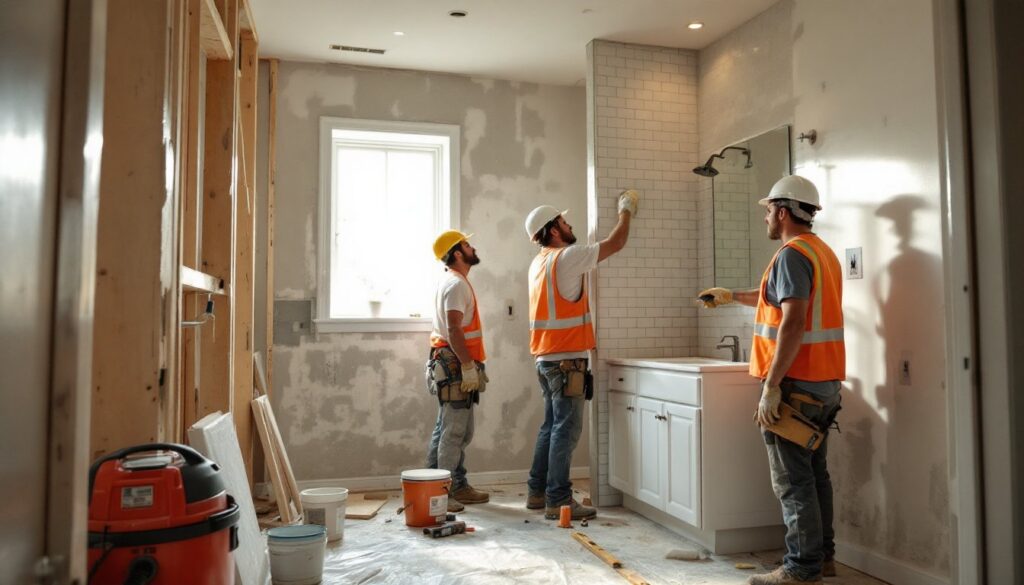
A competent crew of three to four workers can move through demo, framing, MEP (mechanical, electrical, plumbing) rough-in, drywall, tile, and fixture installation in 20–30 working days. The real clock-stopper here isn’t labor: it’s drying time. Drywall mud needs 24–48 hours between coats, tile adhesive and grout cure slowly, and paint needs proper ventilation time.
Major Bathroom Renovations (8-12+ Weeks)
Major renovations, reconfigured layouts, relocated plumbing, structural changes, or high-end custom finishes, span 8–12 weeks or longer. These projects might move walls, install heated floors, add steam showers, or include custom cabinetry. How long does a bathroom remodel take at this scale? Structural work alone adds 2–3 weeks, and custom elements compound the timeline.
Larger crews (4–6 people) don’t necessarily halve the time: many phases can’t run in parallel. Framing must complete before electrical, which precedes plumbing rough-in. Custom millwork and tile patterns introduce lead times. Permit delays or inspection hold-ups can easily add another 2–4 weeks. Budget 8–12 weeks minimum, and treat anything beyond that as a bonus.
Key Phases That Impact Your Timeline
Every bathroom remodel follows a sequence, and understanding each phase helps you spot where delays hide.
Demolition usually runs 1–3 days for a small bathroom, depending on how much you’re tearing out. If you’re keeping the existing tub and toilet, demo is quicker. Full gut jobs take longer because everything, drywall, flooring, fixtures, must come out carefully to avoid damage to adjacent spaces.
Rough-in work (frumbing, electrical, HVAC) often takes 3–5 days. This is where hidden problems surface: a misplaced stud, galvanized pipes that corrode internally, or undersized electrical circuits. Plan a contingency buffer here because surprises are common. This phase requires inspections before you wall it up, and inspection scheduling can add a week by itself.
Drywall and prep typically takes 2–3 days, but drying and mudding add another 3–5 days minimum. Moisture-resistant drywall (sometimes called “green board”) is standard in bathrooms, and proper installation prevents mold down the road. Multiple mud coats and sanding aren’t glamorous, but they’re non-negotiable.
Tile and flooring usually spans 3–7 days depending on area and complexity. A simple 5×8 bathroom with basic tile moves faster than intricate mosaics or large-format tile with minimal grout lines. Grout and sealant cure times can add another 2–3 days before you can use the space normally.
Fixture installation and finishing takes 2–4 days. Vanity, toilet, shower valve, faucets, lighting, and hardware all slot in. Final paint touch-ups, caulking, and cleanup round out the project. Research from HomeAdvisor on bathroom remodeling timelines breaks down similar sequences and shows consistent patterns across job sizes.
Planning, Permitting, And Inspections
Permits and inspections often feel like bureaucratic drag, but they’re the hidden timeline tax that catches many homeowners off guard.
Design and planning should happen before permits. Sketch your layout, choose fixtures, finalize tile selections, and resolve structural questions upfront. This phase takes 1–2 weeks if you’re decisive: it can drag to a month if you’re indecisive or waiting for custom orders. Don’t rush it, changes mid-project cost money and time.
Permitting varies wildly by jurisdiction. Some municipalities turn permits around in 3–5 business days: others take 2–3 weeks. Bathroom remodels typically require building permits if you’re moving plumbing, changing electrical, or altering structural elements. Even cosmetic updates might need permits in some areas. File early and expect inspections at rough-in and final stages. ImproveNet’s breakdown of bathroom remodeling timelines includes permit processing as a major variable.
Inspections themselves are quick (30–60 minutes), but scheduling them can add 1–2 weeks to your timeline. Many inspectors book 2–4 weeks out, especially in busy seasons (spring and early summer). Plan around this, don’t assume your crew can march straight through without waiting for an inspector to sign off. A well-timed remodel schedules rough-in and final inspections weeks in advance.
Factors That Cause Delays (And How To Avoid Them)
Most bathroom remodel delays aren’t mysteries: they’re preventable with planning and honesty.
Hidden water damage and mold are the biggest surprise killers. Behind old tile, under rotted subfloors, or inside wall cavities, moisture problems multiply costs and time. Once found, damaged framing and subfloors must dry or be replaced, adding 1–3 weeks. Prevent this by having an inspector assess the space before permits. Replace any damaged material immediately.
Outdated or undersized systems slow you down if your home was built in the 1970s or earlier. Old galvanized supply lines, inadequate venting, or undersized electrical panels mean upgrades contractors didn’t anticipate. Budget a 1–2 week contingency if your home is older, and be prepared to upgrade core systems if the contractor flags issues.
Fixture lead times disrupt schedules. Custom vanities, special tile orders, or premium faucets can take 4–8 weeks to arrive. Order long-lead items before you break ground. A smart move: select fixtures during the design phase and confirm delivery dates before signing the construction contract.
Weather and site conditions matter, especially for ventilation and drying. Heavy humidity slows paint, drywall mud, and grout cure times. Winter projects in cold climates risk freezing issues with grout and adhesives. Schedule remodels during mild seasons when possible, and ensure adequate ventilation fans run continuously during and after work.
Crew availability and scheduling conflicts add weeks. A contractor juggling multiple jobs might slot your work into gaps, meaning your crew isn’t always there. Clarify upfront whether your bathroom remodel schedule is a dedicated job or fits around other commitments. A dedicated crew finishes faster but may cost more.
Scope creep is the silent killer. “While we’re in here, let’s move the toilet” or “Can we expand the shower?” sound minor but cascade through plumbing, electrical, and framing. Make decisions upfront and stick to them. Changes mid-project add time and cost in ways that aren’t always visible until the work is underway.