
Carpet mold isn’t just an eyesore, it’s a health hazard that spreads faster than most homeowners realize. Whether caused by water damage, high humidity, or a spill that dried too slowly, mold thrives in carpet fibers and the padding underneath, releasing spores that can trigger allergies and respiratory issues. The good news? Catching it early and knowing the difference between a DIY cleanup and a job requiring professionals can save you thousands in replacement costs. This guide walks you through identifying mold, tackling light infestations yourself, selecting the best mold and mildew carpet cleaner for your situation, and preventing it from coming back.
Table of Contents
ToggleKey Takeaways
- Carpet mold develops when moisture is trapped in fibers for more than 24–48 hours, so identifying musty odors, dark spots, and spongy textures early can prevent expensive replacement costs.
- Light mold infestations can be tackled with a vinegar and baking soda solution, but professional help is essential if mold covers more than 10 square feet or anyone in your household has respiratory conditions.
- The best carpet mold cleaner for commercial use should feature antifungal agents like tea tree oil, avoid bleach, and require minimal water extraction to prevent spreading spores.
- Moisture control through dehumidifiers (keeping humidity at 30–50%), improved airflow, and fast drying of spills within 24 hours are the most effective prevention methods to stop mold from returning.
- Carpet replacement is worth considering if mold persists despite cleaning, the underlying subfloor is wet, or household members have asthma or allergies, as lingering mold poses ongoing health risks.
Understanding Carpet Mold and When Professional Help Is Needed
Carpet mold develops when moisture gets trapped in fibers or padding for more than 24–48 hours. Unlike surface stains, mold colonizes deep within the carpet structure, making it harder to treat than most people expect. Knowing whether you can handle the problem yourself or need to call in a professional saves time and prevents spreading mold spores throughout your home.
Signs Your Carpet Has Mold
The first step is identifying whether you’re actually dealing with mold. Look for these telltale signs:
- Musty odor: A persistent earthy smell that doesn’t fade after airing out the room
- Dark spots or patches: Often green, black, or brown discoloration, usually in the carpet backing or padding
- Soft or spongy texture: The carpet feels damp or squishy underfoot, even after drying
- Visible fuzzy growth: In severe cases, you’ll see actual mold colonies on carpet fibers
- Health symptoms: You or household members experience sneezing, coughing, or asthma flare-ups only in that room
If mold covers more than 10 square feet of carpet, or if the carpet has been wet for more than 48 hours, it’s time to call a professional. Mold remediation at that scale requires industrial-grade equipment and proper containment to prevent spore spread. You’ll also need a professional if someone in your household has a compromised immune system, severe asthma, or other respiratory conditions, the risk isn’t worth a DIY attempt.
DIY Cleaning Methods for Light Mold Removal
Light mold (small patches, early-stage musty smells) can be tackled at home if caught early. The key is moisture control and proper ventilation, you need to kill the mold and dry the carpet completely to prevent regrowth.
Safety first: Wear a NIOSH-rated N95 or N100 mask, latex gloves, and eye protection. If you have asthma or mold sensitivity, skip DIY cleaning and hire a professional.
Using Vinegar and Baking Soda Solutions
This method works well for mild surface mold and is safer than commercial fungicides for homes with pets or children.
- Vacuum thoroughly: Remove loose debris and mold spores with a HEPA-filter vacuum. This prevents you from spreading spores deeper into the carpet.
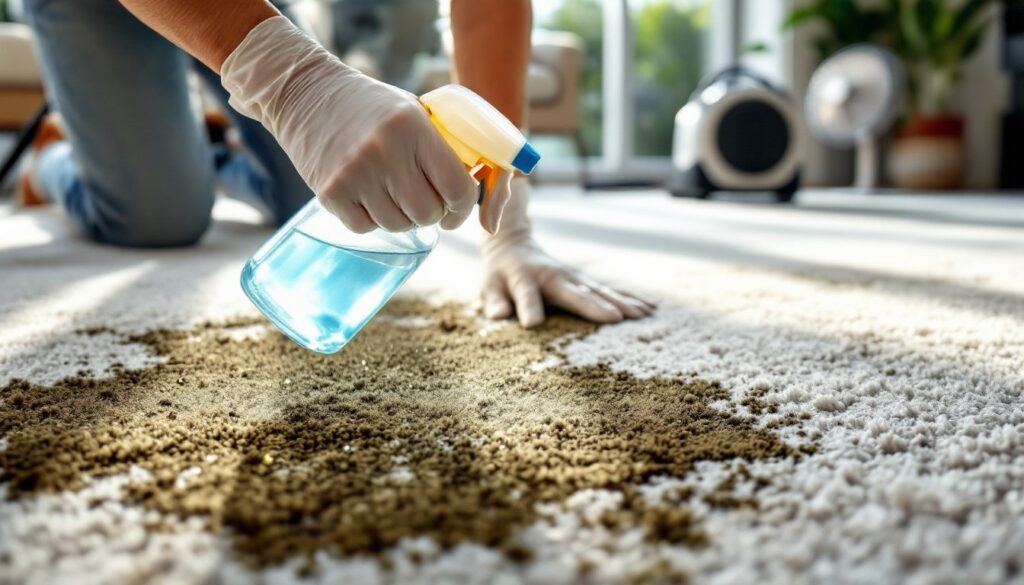
- Prepare the solution: Mix equal parts white vinegar and water in a spray bottle. Vinegar’s acidity kills mold without harsh chemicals.
- Spray and wait: Mist the affected area generously so the carpet is damp but not soaked. Let it sit for 1 hour to allow vinegar to penetrate.
- Scrub gently: Use a soft brush to agitate the fibers, working the solution deeper into the pile and padding.
- Extract moisture: Use a wet/dry vacuum or rent a carpet extraction machine to pull out as much liquid as possible. This is crucial, trapped moisture will spawn new mold.
- Dry completely: Open windows, run fans, and dehumidifiers for 48 hours. The carpet must dry completely or mold will return.
After drying, sprinkle baking soda over the area, let it sit overnight to absorb any remaining odors, then vacuum thoroughly. This one-two punch tackles both the mold and the musty smell.
Best Commercial Carpet Mold Cleaners
If vinegar doesn’t work or you prefer a commercial product, the best mold carpet cleaner depends on your carpet type and mold severity. Look for products labeled as antimicrobial, antifungal, or specifically designed as a best mold carpet cleaner or mold and mildew carpet cleaner.
Key features to look for:
- Antifungal agents: Ingredients like tea tree oil, citric acid, or quaternary ammonium compounds kill mold spores
- Non-bleach formulas: Bleach damages most carpet fibers and leaves permanent discoloration
- Low moisture requirements: Products that work in damp conditions or don’t require heavy water extraction
- Pet and child-safe labels: Look for certifications if you have young kids or animals
Standard enzymatic cleaners (designed for organic stains) don’t always address mold, they’re meant for food or body fluids. Instead, use a dedicated antimicrobial carpet cleaner. When applying any commercial cleaner, follow the label instructions exactly. Most require light scrubbing and thorough drying. After treatment, methods for removing mildew from walls, fabric, and wood include similar drying principles, moisture control is your strongest ally.
Rent or buy a carpet extractor to remove liquid after treatment. Consumer extractors (around $100–$200 to rent) aren’t as powerful as professional equipment, but they’re effective enough for light infestations.
Prevention Techniques to Keep Mold From Returning
Mold prevention is simpler and cheaper than removal. Since moisture is mold’s lifeline, your job is to deny it that.
- Control humidity: Keep indoor humidity between 30–50% using a dehumidifier. Basements and bathrooms need extra attention. A basic dehumidifier costs $50–$150 and pays for itself by preventing damage.
- Improve airflow: Open windows on dry days, run ceiling fans, and avoid blocking air vents with furniture. Stagnant air traps moisture.
- Address water sources immediately: Leaky pipes, foundation cracks, or poor drainage lead to damp carpets. Fix these before they become mold breeding grounds.
- Use moisture barriers: If your carpet sits on a concrete subfloor (common in basements), install a vapor barrier or waterproof underlayment before laying new carpet.
- Vent bathroom and kitchen fans outside: These exhaust moisture directly outdoors instead of into walls and ceilings.
- Dry spills fast: Water on carpet must be extracted and dried within 24 hours. For large spills, rent a commercial extractor immediately.
Regular vacuuming with a HEPA filter also removes moisture-loving dust mites and mold spores before they proliferate. Home improvement how-tos and comprehensive guides often include seasonal maintenance checklists, incorporating mold prevention into your spring and fall routines keeps problems small.
When to Replace Your Carpet Instead of Cleaning
Sometimes cleaning isn’t enough. If your carpet meets any of these criteria, replacement is the smarter choice:
- Large mold colonies (more than 10 square feet of visible growth)
- Persistent moisture: The carpet is still damp even though drying attempts, or the underlying subfloor is wet
- Strong musty smell that doesn’t fade: This means mold has colonized deep in the padding, which is nearly impossible to clean
- Previous mold removal failed: If you’ve cleaned it once and mold returned within a few months, the underlying moisture problem isn’t solved
- The carpet is old: Older carpet with deteriorated padding absorbs and holds moisture more readily, making mold recurrence likely
- Health concerns: If anyone in your home has asthma, allergies, or respiratory issues, mold-affected carpet poses ongoing risk even after treatment
When replacing carpet, invest in moisture-resistant underlayment and address the root cause of moisture first. A new carpet won’t solve a foundation leak or poor drainage. If water is the culprit, fix that problem before laying new flooring. Installing quality home organization and improvement guidance often covers selecting durable, moisture-resistant materials for high-risk areas like basements, bathrooms, and kitchens.
Budget $3–$10 per square foot for basic carpet replacement, plus $1–$3 per square foot for better-quality underlayment. This isn’t cheap, but it’s far less expensive than replacing carpet twice or dealing with mold-related health issues.