
Choosing the right wood for kitchen cabinets is one of the most important decisions a homeowner makes during a renovation. Unlike a paint color you can change in a weekend, cabinet wood is a long-term investment that affects both aesthetics and function. The best wood for kitchen cabinets depends on your durability needs, budget, and design preferences, and the options are wider than you might think. This guide walks you through the most popular woods for kitchen cabinets, their strengths and weaknesses, and how to match each species to your specific kitchen and lifestyle.
Table of Contents
ToggleKey Takeaways
- The best wood for kitchen cabinets balances durability, moisture resistance, and design preferences based on your kitchen environment and lifestyle needs.
- Maple and white oak offer superior hardness and stability (1,450 and 1,360 Janka ratings respectively), making them ideal for high-traffic kitchens, while cherry and alder provide budget-friendly alternatives with distinct aesthetic appeal.
- Oak delivers classic character and value at 20–30% lower cost than premium woods, with prominent grain that suits farmhouse and transitional styles.
- Cherry wood uniquely improves with age, developing a warm reddish-brown patina within 6–12 months, making it perfect for homeowners seeking timeless elegance without maximum expense.
- Hickory excels in rustic farmhouse kitchens with striking grain variation, while alder is the most budget-conscious choice, especially when painted to mask its softer nature.
- Visit cabinet showrooms to examine finished samples under your actual kitchen lighting before committing to a wood species, ensuring your choice aligns with long-term satisfaction and proper maintenance.
Why Wood Species Matters For Kitchen Cabinets
Kitchen cabinets live in a tough environment. They face temperature swings from the oven, humidity from the dishwasher, grease splatters, and daily wear from opening and closing. Not all woods handle this equally. Wood species differ in hardness, moisture resistance, grain stability, and how they accept stain or paint.
Hardness matters because softer woods dent and scratch more easily. Janka hardness ratings measure this: higher numbers mean greater resistance to impact. Moisture stability is critical in kitchens, woods that swell and shrink excessively will develop gaps or stick. Grain tightness affects whether stain looks uniform or blotchy. Understanding these differences prevents costly mistakes and helps you pick cabinets that’ll look good and function well for 15+ years.
Oak: The Classic Choice For Durability And Aesthetics
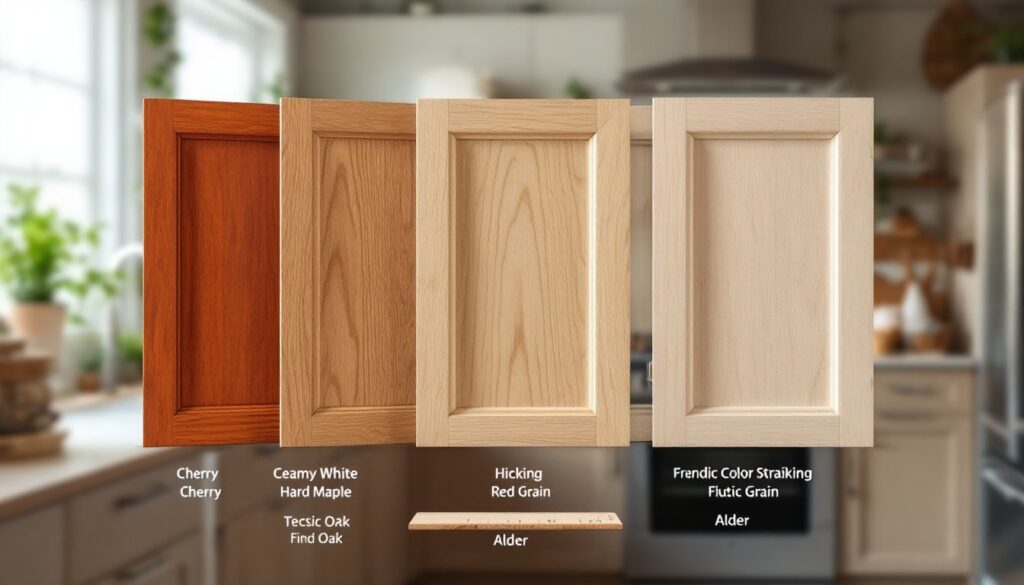
Red and white oak are among the most popular woods for kitchen cabinets, and for good reason. Both rank around 1,200–1,360 on the Janka hardness scale, making them reasonably resistant to dings. Oak’s prominent, open grain gives cabinets bold character that works well in traditional, farmhouse, and transitional kitchens.
Red oak is slightly softer and warmer in tone, while white oak has tighter grain and greater moisture resistance, a genuine advantage in humid kitchens. Oak stains beautifully and accepts both clear finishes and paint well. The trade-off? Oak’s grain pattern is very visible, which can look casual rather than refined. It’s also prone to showing dust in those open grain pores. Oak remains affordable compared to premium species, typically 20–30% less than maple or cherry. If you’re planning a kitchen refresh and appreciate visible grain character, oak delivers solid performance without very costly.
Maple: Premium Quality And Lasting Performance
Hard maple is the workhorse of high-end cabinet shops. It scores around 1,450 on the Janka scale, meaningfully harder than oak, and its tight, fine grain resists dents and looks polished. Maple accepts stain unevenly due to its dense grain structure, so it’s typically finished with clear coat to showcase the wood’s natural light color, or painted for a contemporary look. Many custom cabinet makers favor maple for its stability and ability to hold intricate details.
The downside is cost: maple typically runs 30–50% more than oak. It also requires skill to stain evenly: poor prep results in blotchy, amateur-looking finishes. For a homeowner committed to quality and willing to invest upfront, maple pays dividends. Its durability means fewer repairs and refinishes over the cabinet’s lifespan. If you’re planning to keep your kitchen cabinets for 20+ years and want something that withstands heavy daily use, maple is worth the premium. Many builders and designers use maple as their default choice for serious renovation projects.
Cherry: Rich Color And Timeless Elegance
Cherry wood brings warmth and sophistication to any kitchen. It ranks around 1,000 on the Janka scale, slightly softer than oak or maple, but makes up for it with stunning natural color that deepens and enriches over time. This aging quality is unique among cabinet woods: cherry actually becomes more beautiful as it absorbs light, developing a warm reddish-brown patina within 6–12 months.
Cherry’s medium grain is tight enough to look refined but visible enough to add character. It stains beautifully and doesn’t require the skill that maple demands. The appeal is obvious in traditional and transitional kitchens, though cherry’s warm tones can feel dated in ultra-modern spaces. Cherry costs more than oak but typically less than premium maple, making it a middle-ground option for homeowners wanting visual impact without maximum expense. One consideration: cherry is slightly more susceptible to moisture cupping than oak or maple, so proper kitchen ventilation and humidity control matter. Still, for those seeking warmth and timeless elegance, cherry delivers both.
Hickory And Alder: Budget-Friendly Alternatives
Hickory and alder round out the value end of the spectrum for types of wood for kitchen cabinets, each with distinct characteristics. Hickory is extremely hard, scoring around 1,820 on the Janka scale, tougher than oak or maple, with striking grain variation and color streaking that makes every board unique. This rustic, high-contrast look works beautifully in farmhouse and cabin-style kitchens but can feel chaotic in minimalist spaces.
Alder is softer (around 590 on the Janka scale) and finer-grained than hickory, with a pale, neutral tone that accepts stain beautifully. It’s one of the budget-friendliest woods for kitchen cabinets, often 40–50% cheaper than oak. Alder works well painted, which masks its softer nature and makes durability less of a concern. Both hickory and alder suit homeowners prioritizing cost over maximum durability, or those with lighter kitchen use. Alder especially makes sense if you’re painting cabinets: you’re not paying for grain character you won’t see. For rental properties, guest houses, or kitchens with modest traffic, these woods offer practical value and distinctive styles at lower price points.
Matching Wood To Your Kitchen Style And Budget
Selecting the right wood species means weighing three factors: style preference, expected durability, and budget. Start with the design: Do you want visible grain character or a smooth, refined look? Hickory and oak deliver grain drama, while maple and alder offer subtlety. Next, consider your kitchen’s use and humidity. High-traffic families or humid kitchens benefit from harder, more stable woods like maple or white oak. Finally, set a realistic budget and understand the cost-to-durability trade-off.
Resources like Choosing the Best Wood for Your Kitchen Cabinets provide detailed wood comparisons and finish options. For design inspiration, The Kitchn and curated solid wood cabinet examples showcase real kitchens using different species, helping you visualize your choices before committing. Don’t rush this decision. Visit a cabinet showroom and look at finished samples under your kitchen’s actual lighting. See how different woods feel in person and imagine living with that color and grain daily. Also consider finishes and hardware early: they amplify or downplay the wood’s natural character. Adding crown molding or other trim elements can elevate the overall look, regardless of which wood species you select. A well-chosen wood paired with thoughtful finishing creates cabinets you’ll love for decades.
Conclusion
The best wood for kitchen cabinets isn’t one-size-fits-all, it depends on your home, style, and priorities. Maple offers unmatched durability and refinement: oak delivers classic character and value: cherry brings warmth and aging beauty: hickory and alder suit rustic or budget-conscious projects. Start by clarifying what matters most to you: longevity, aesthetics, budget, or a combination. Visit showrooms, touch samples, and envision the wood in your actual kitchen under real light. A solid wood cabinet investment, paired with proper finishing and maintenance, will serve your family well for 20 years or more.