
Base kitchen cabinets with drawers have become the go-to choice for homeowners who want better access and organization than traditional cabinet doors. Unlike standard base cabinets, which often force you to crouch and rummage through deep spaces, drawer-based cabinets keep everything at arm’s reach and highly visible. Whether you’re doing a full kitchen renovation or just upgrading your storage setup, understanding the types, installation methods, and maintenance of base kitchen cabinets with drawers will help you make smart choices for your space. This guide walks you through everything you need to know to tackle this project with confidence.
Table of Contents
ToggleWhy Choose Base Cabinets With Drawers Over Traditional Options
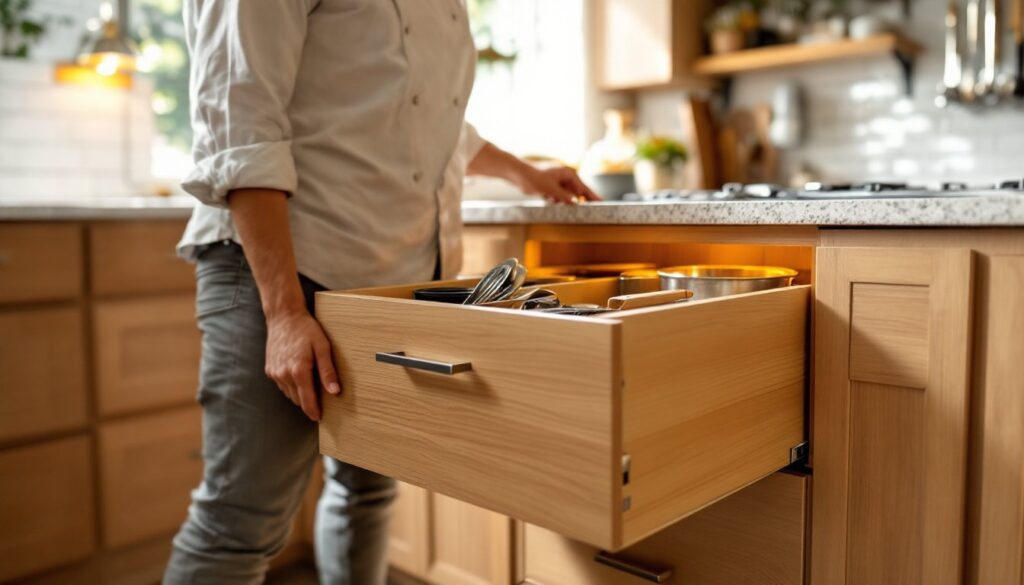
Base kitchen cabinets with drawers outperform traditional door cabinets in several practical ways. First, they eliminate the “dead zone” problem, that awkward space at the back of a deep cabinet you can never quite reach without getting on your hands and knees. Drawers pull straight out, giving you 100% access to every inch of storage, so nothing gets lost or forgotten. Second, they reduce back strain during everyday cooking. Instead of bending and stretching, you access items at a comfortable height. Third, drawers are naturally more durable than hinged doors over time: they don’t sag or stick as easily when built correctly.
Organization is another huge win. With drawer dividers and pull-out trays, you can assign specific spaces for utensils, linens, or cookware. Tools and smaller items don’t disappear into corners. Aesthetically, drawers create a sleeker, more modern look than a cabinet face full of knob-and-latch hardware. They also close more quietly and softly when equipped with soft-close slides, which most higher-end drawers now include.
One honest trade-off: drawers cost more upfront than traditional cabinets and take more planning to install correctly. A poorly hung drawer won’t work smoothly: the bearing surfaces and slides need precise alignment. That said, the investment pays dividends in function and user satisfaction for years to come.
Types of Base Kitchen Cabinets With Drawers
Drawer Configurations and Styles
Base kitchen cabinets with drawers come in several common configurations, each suited to different storage needs. Full-depth drawers run the entire width of a cabinet and hold larger items like sheet pans, small appliances, or serving dishes. These typically sit below a countertop and require 3/4-inch to 1-inch thick slides rated for high weight (often 100+ lbs. per pair). Shallow drawers are usually 4 to 6 inches tall and perfect for flatware, gadgets, or linens: they live above full-depth drawers or as standalone units.
Tiered configurations stack multiple shallow drawers above one or two deep ones, maximizing vertical space and keeping frequently used items within easy reach. Some homeowners opt for hybrid layouts, combining drawers on one side with a traditional door cabinet on the other, which works well when you need both open shelving and deep storage.
Material quality matters. Plywood-construction drawers with solid wood fronts resist warping better than particle board. Soft-close slides (also called full-extension slides) are now standard on mid-range and premium cabinets: they cost $40–$100 per pair but eliminate slamming and extend drawer lifespan significantly. Budget cabinets may use basic roller slides, which are cheaper but less smooth and durable.
Finish options include painted MDF (economical but can chip), solid wood stains (warmer aesthetic), or laminate (durable and easy to clean). Consider your kitchen’s moisture and temperature swings, seasoning cabinets for a week in their final location helps solid wood adjust before installation.
Measuring and Planning Your Cabinet Layout
Before ordering or installing base kitchen cabinets with drawers, measure twice (or three times). Start by noting your kitchen’s wall lengths and identifying any obstructions, outlets, windows, pipes, or gas lines. Use a stud finder to locate wall studs: most building codes require cabinets to be fastened into studs, not just drywall.
Measure the floor-to-countertop height. Standard countertops sit 36 inches above the finished floor, which means base cabinets are typically 34.5 inches tall (allowing for countertop thickness). But, if your floors are uneven, common in older homes, you’ll need to account for shims and leveling. Take measurements at multiple points along each wall.
Decide on drawer size and spacing. A typical kitchen island or peninsula might have two or three drawers stacked vertically, with the deepest one at the bottom for weight distribution and ergonomics. Shallow drawers should sit between waist and shoulder height for comfortable access. Most cabinets come in standard widths, 12, 15, 18, 24, 30, and 36 inches, so plan your layout to fit these modules without forcing custom cuts.
Check local building codes. Many jurisdictions require cabinet fastening with 1/2-inch wood screws into studs or equivalent structural attachment. Some codes also mandate that tall cabinet stacks exceed a certain height before bracing becomes mandatory. Interior design sources like The Kitchn offer inspiration for layouts that balance function and aesthetics. Sketch your plan on graph paper or use free kitchen design software to visualize placement before you commit.
Installation Tips for DIY Success
Installation is where careful preparation prevents disaster. Start by assembling all cabinets according to manufacturer instructions in a clear workspace, don’t assemble in the kitchen itself. Check that all frames are square using a framing square or speed square: even 1/16 inch of twist will throw off drawer alignment. Attach any face frames or trim before wall installation.
Fasten cabinets directly into wall studs using 3-inch wood screws through the rear face frame or mounting rails. Space fasteners roughly 12 inches apart vertically. If studs don’t align perfectly with your cabinet placement, use construction adhesive rated for cabinetry and adjust fastener spacing, but always aim for at least two studs per cabinet section. Shim cabinets level and plumb before final fastening, a laser level makes this faster and more accurate than a standard bubble level.
Draw a level reference line on the wall before installing. Measure up 36 inches (or your exact countertop height minus 1.5 inches) and snap a chalk line. This ensures all cabinets sit at the same height, which is critical for alignment with countertops and appliances. Install cabinets in groups, fastening adjacent sections together with 1.25-inch pocket hole screws or cabinet connectors before securing to the wall.
Once cabinets are mounted, install drawer slides according to the manufacturer’s template. Most slides require precise measurements, typically centered 1.75 inches from the top and bottom of the drawer opening. Use shims to keep slides perfectly parallel. Test each drawer multiple times with light and full loads before declaring the job complete. Quality brands like IKEA’s MAXIMERA system include detailed guides: follow them exactly. If you’re not confident in carpentry or drywall anchoring, hire a licensed cabinet installer for this portion.
Maximizing Storage and Organization in Drawer Cabinets
Once your base kitchen cabinets with drawers are installed, organization determines whether they actually improve your life or just become cluttered dead zones. Start with quality drawer dividers or custom inserts. Utensil dividers keep flatware organized without tangling: spice racks and pull-out shelves bring items toward the front for easy identification. Tiered risers and bamboo organizers are affordable ($10–$40 per set) and transform a basic drawer into a functional system.
Group items by use. Cooking utensils belong near the stove: food storage containers near the pantry area: linens and towels near the dishwasher. Assign one drawer to each category and resist the urge to overstuff. A drawer crammed beyond capacity will jam and damage slides prematurely. Label the drawer fronts (using magnetic labels or adhesive tags) so everyone in the household knows where things live, it saves time and prevents you from ending up with three junk drawers.
For deep drawers storing pots or sheet pans, use vertical dividers or a file-organizing tray tilted at 45 degrees. This prevents stacking and makes items instantly visible. Pull-out shelves and baskets add another layer, especially useful in under-sink cabinets with plumbing that would otherwise waste space. Professional kitchen designers often recommend curated product selections that balance form and function, browse these for ideas matched to your style.
Maintenance and Durability Considerations
Base kitchen cabinets with drawers last decades with basic care. Wipe down drawer fronts weekly with a damp microfiber cloth and appropriate cleaner (wood soap for wood, mild dish soap for laminate or painted finishes). Avoid excessive moisture: water left sitting on wood causes swelling and finish damage. If you spill inside a drawer, wipe and dry immediately.
Slide maintenance is essential. Every 6 months, vacuum out dust and debris from the slide channels, this prevents grit from scratching bearing surfaces. A light coat of silicone spray lubricant ($5–$10 per can) on the slides keeps them gliding smoothly: don’t use oil-based products, which attract dust. Check for loose fasteners quarterly: a drawer that suddenly feels wobbly often just needs a tightened screw.
For wood cabinets, inspect for finish cracks or chips annually. Minor damage can be touched up with wood filler and stain: larger issues may need professional refinishing. Avoid placing heated items or extreme temperature changes directly against cabinet sides, thermal shock can cause warping. Finally, stay within weight limits. Most standard drawer slides handle 100–125 lbs. comfortably, but overloading them accelerates wear and voids warranties.
Building codes in most jurisdictions require fasteners to be inspected during rough-in and before drywall, so if you’re installing during a larger renovation, schedule that inspection. Small maintenance investments now prevent expensive repairs or replacement later.
Final Thoughts
Base kitchen cabinets with drawers represent a meaningful upgrade in kitchen storage and daily functionality. They require careful measurement, precise installation, and thoughtful organization, but the payoff in accessibility, durability, and user satisfaction makes the effort worthwhile. Whether you’re a confident DIY installer or hiring a professional for the heavy lifting, understanding how these cabinets work, what materials matter, and how to maintain them ensures your investment delivers real value for years to come. Start with a solid plan, invest in quality slides and materials, and don’t rush the installation. Your future self will thank you every time you glide open a drawer and find exactly what you need.