
A good cutting board should work as hard as you do in the kitchen. Whether you’re prepping vegetables for weeknight dinners or breaking down a whole chicken, the last thing you want is to spend half an hour hand-washing your tools. Dishwasher safe cutting boards have become a practical staple for busy homeowners, offering the convenience of quick cleanup without sacrificing functionality or longevity. In 2026, the selection of durable, dishwasher-compatible boards spans everything from high-tech composites to naturally antimicrobial bamboo, each with distinct advantages depending on your kitchen workflow. This guide walks you through choosing, using, and maintaining a dishwasher safe cutting board that’ll earn its spot on your kitchen counter for years.
Table of Contents
ToggleKey Takeaways
- A dishwasher safe cutting board eliminates hand-washing hassles while providing superior bacterial sanitization through hot water cycles, especially important after handling raw meat and fish.
- High-density polyethylene (HDPE) and polypropylene plastic boards are the most reliably dishwasher safe materials, offering durability, affordability ($15–$40), and lasting 120+ dishwasher cycles without degradation.
- Bamboo boards marketed as dishwasher safe may delaminate with repeated hot water exposure—choose only those with waterproof epoxy coatings or explicit manufacturer durability guarantees.
- Select a dishwasher safe cutting board based on your household needs: verify it fits your dishwasher’s bottom rack, prioritize rubber feet for safety, and consider dedicated boards for raw proteins to prevent cross-contamination.
- Extend your board’s lifespan by rinsing debris before dishwashing, using the hottest cycle for meat prep, air drying instead of heated drying, and replacing boards with deep gouges that can trap bacteria.
- Store boards upright in a rack rather than stacked flat to prevent moisture trapping, and hand-inspect monthly for cracks—a quality dishwasher safe cutting board typically costs less than frequent replacement.
Why Dishwasher Safe Cutting Boards Matter for Modern Kitchens
Hand-washing dishes is fine in theory, until you’re staring at a greasy cutting board at 9 p.m. on a Tuesday. Dishwasher safe cutting boards solve a real kitchen workflow problem: they collapse the gap between food safety and convenience. Raw chicken or raw fish can harbor bacteria like salmonella and listeria, so thorough sanitization matters. A dishwasher cycle with hot water and detergent actually provides better bacterial kill than most hand-washing methods, especially when you’re tired and rushing.
For homeowners with full households, limited counter space, or anyone managing multiple meal prep sessions, a dishwasher safe board saves time and ensures proper hygiene. Wood and bamboo boards, traditionally hand-wash only, require more care and can warp if exposed to extreme temperature swings. Modern dishwasher safe options eliminate that worry. You’ll also want boards that resist staining and odor absorption, two problems that persist even with careful hand-washing. Recent kitchen design ideas from The Kitchn highlight how efficient dishwashing routines reduce overall kitchen stress for families managing busy schedules.
Best Materials for Dishwasher Safe Cutting Boards
Plastic and Polypropylene Options
Plastic boards are the workhorse of restaurant kitchens for good reason: they’re durable, inexpensive, and genuinely dishwasher safe from day one. Look for boards made from high-density polyethylene (HDPE) or polypropylene (PP), both rated for 120+ repeated dishwasher cycles without degradation. These plastics won’t dull knives as quickly as harder surfaces, and they provide enough grip to prevent sliding while cutting.
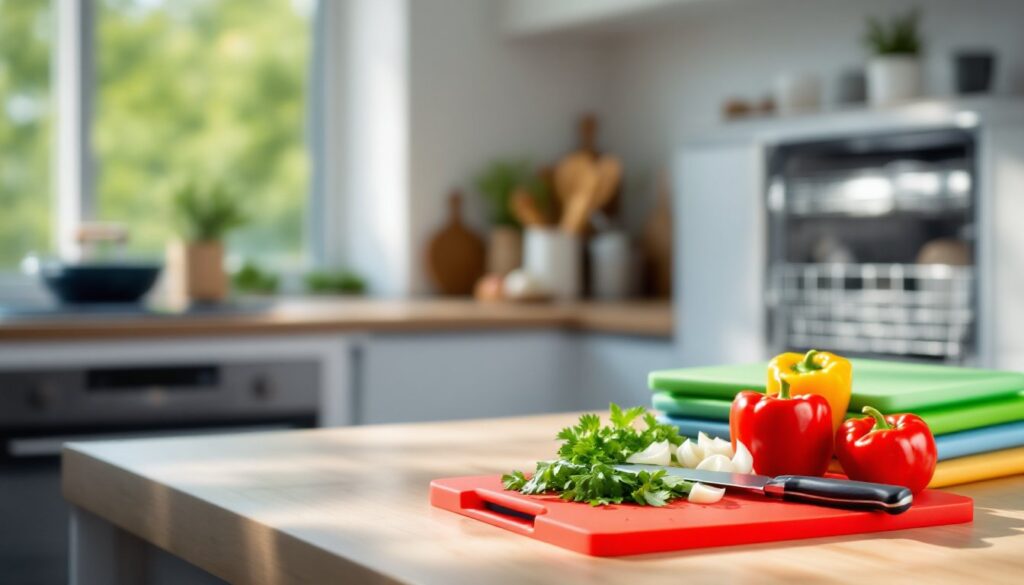
Color-coded plastic boards, red for raw meat, green for vegetables, yellow for poultry, help prevent cross-contamination in busy kitchens. They’re lightweight, easy to store, and replaceable if they ever develop deep cuts that harbor bacteria (though good ones last years). The downside: some cooks find them less pleasant to use than heavier boards, and they can stain over time (though stains are purely cosmetic). A quality plastic board from a reputable kitchen-supply brand runs $15–$40 depending on thickness and size.
Bamboo and Wood Alternatives
Bamboo has become a popular “dishwasher safe” claim, but read the fine print. Some bamboo boards are technically dishwasher safe, but they’ll last longer if hand-washed. True bamboo is harder than most woods, naturally antimicrobial (bamboo contains silica, which resists bacterial growth), and visually appealing on the counter. The catch: repeated hot water exposure can cause the laminations to delaminate over time, and bamboo doesn’t tolerate temperature shocks well.
If you want a bamboo board that handles dishwashers, choose one with a waterproof epoxy coating or from a maker who specifically engineers their construction for dishwasher durability. Real wood (walnut, maple, cherry) is almost never truly dishwasher safe, the wood swells, warps, and can split. Unless the maker guarantees dishwasher compatibility with documented testing, treat wood boards as hand-wash only. Testing from Good Housekeeping reviews top cutting boards and clearly identifies which ones tolerate dishwashers without degradation.
How to Choose the Right Dishwasher Safe Cutting Board
Start by asking yourself three questions: What’ll you cut most? How much counter space do you have? And do you want one board for everything, or several specialized ones?
Size and weight matter. A board that’s too light slides around mid-chop: too heavy and you won’t want to retrieve it from the cabinet. Standard boards range from 10″ × 8″ (small, single-portion prep) to 18″ × 12″ (large enough for breakdown work). If your household cuts raw proteins frequently, a dedicated board prevents cross-contamination. One full-size plastic board handles most households, but professional cooks and large families often prefer two or three boards in different sizes.
Grip and feet. A rubber grip on the underside prevents the board from sliding on your counter, a huge safety feature. Look for boards with rubberized feet or non-slip corners: some have a raised edge or channel to catch juices. A slightly textured surface also improves knife grip without dulling edges as quickly as rough plastics do.
Dishwasher rack placement. Verify the board fits in your dishwasher’s bottom rack. Some oversized boards don’t fit and would end up hand-washed anyway, defeating the purpose. Check the manufacturer’s specifications or measure against your existing dishes.
Check the label. Reputable makers state “dishwasher safe” explicitly on packaging. If it says “hand-wash only,” trust that warning, it means the material or construction won’t tolerate the cycle. Budget $20–$60 for a mid-range plastic or composite board from a known kitchen brand: premium options run higher but usually offer better grip and durability.
Care Tips to Extend Your Cutting Board’s Lifespan
Even dishwasher safe boards benefit from a little intentional care. Before the first trip to the dishwasher, rinse off large food debris. Dried-on food can clog spray arms, and chunks might prevent proper water circulation around the board.
Use the hottest water and longest cycle your dishwasher offers for raw meat prep boards, this ensures better sanitation. For everyday vegetable prep boards, a standard cycle works fine. Skip the heated drying cycle if your dishwasher has one: air drying is gentler and leaves no water spots.
Once a month (or every few months with heavy use), hand-wash the board with warm soapy water and a soft sponge, then inspect for cracks or deep gouges. Minor surface scratches are normal and harmless, but a deep cut can trap bacteria even after dishwashing. If your board develops many deep cuts, it’s time to replace it, a good board costs less than a year’s worth of takeout. Some cooks periodically sanitize plastic boards by soaking them in a dilute bleach solution (1 tablespoon per gallon of water) for 5–10 minutes, then rinsing thoroughly.
Store boards upright in a rack or cabinet rather than stacked flat, which traps moisture. Never leave a wet board in a closed drawer. Home organization tips emphasize proper storage extends the life of kitchen tools, reducing the need for frequent replacement. If a board starts to warp or develop permanent odors, don’t force it, most quality boards cost far less than the hassle of dealing with a unreliable tool.
Conclusion
A dishwasher safe cutting board is a small investment that pays dividends in kitchen efficiency and food safety. By choosing the right material, plastic for durability and daily work, or high-quality bamboo with dishwasher-rated construction for a nicer aesthetic, and following basic care habits, you’ll get years of reliable use. The best board is the one you’ll actually reach for, so pick one that fits your space, your workflow, and your cleaning routine.